

Protein is often at the centre of health conversations. Whether you are looking at fitness blogs or medical journals, everyone seems to have an opinion on how much you need. At Functional Nexus, we look at protein as much more than just a tool for building muscle. It is a fundamental building block for almost every process in your body.
When we take a Functional Medicine approach, we consider how protein impacts your hormones, your immune system, and your ability to detoxify. It is about quality and timing just as much as it is about the total amount.
Why Protein Matters for Every Part of You
Most people know that protein is essential for muscles, but its roles go far deeper than that.
1. Blood Sugar Stability
Including protein in your meals helps slow down the absorption of sugar into your bloodstream. This prevents the sharp spikes and crashes that lead to energy slumps and cravings later in the day.
2. Immune Support
Your antibodies and immune cells are made of proteins. If you are not eating enough, your body may struggle to defend itself against seasonal bugs or chronic inflammation.
3. Hormones and Neurotransmitters
Protein provides the amino acids needed to create hormones like insulin and thyroid hormones. It also helps create neurotransmitters like serotonin and dopamine, which help to support your mood and focus.
4. Detoxification
Your liver requires specific amino acids from protein to process and clear out toxins. Without these building blocks, your natural detox pathways can become sluggish.
Finding Your Balanced Approach
There is a lot of talk about exactly how many grams of protein we should eat. While some people thrive on very high protein diets, others feel better with a more moderate intake. A good rule of thumb in Functional Medicine is to aim for roughly 20 to 30 grams of protein per meal.
Instead of spending your day with a calculator, you can use your hand as a guide. A portion of protein about the size and thickness of your palm is a great starting point for most meals.
Varied Sources of Protein
We encourage a “food first” approach with plenty of variety.
Here are some excellent examples –
- Animal-derived – Grass-fed beef, organic chicken, wild-caught fish, organic dairy and free-range eggs.
- Plant-based – Lentils, chickpeas, beans, soy (tempeh and tofu), nut butters, and quinoa.
- Traditional – Bone broth is a wonderful way to get easily digestible proteins that also support gut health.
A Step-by-Step Plan to Increase Your Intake
If you realise you might be falling short, don’t try to change everything overnight. Follow these steps to build up gradually.
- The Breakfast Audit. Many of us eat a carb-heavy breakfast like toast or cereal. Try to swap this for something protein-rich, like eggs, adding nuts and seeds to your porridge or a collagen-boosted smoothie. This sets the tone for your blood sugar for the rest of the day.
- Add a “Side” of Protein. If you are having a vegetable-based soup or a salad, add a handful of pumpkin seeds, some shredded chicken, or a scoop of lentils.
- Smart Snacking. Move away from biscuits or fruit alone. Pair an apple with some almond butter or have a small bowl of Greek yoghurt with berries.
- Listen to Your Body. Notice how you feel after a high-protein meal versus a low-protein one. Do you have more energy? Are you less hungry two hours later? Your body will tell you what it needs.
Three Quick Protein-Focused Recipes (30-40 Minutes Total)
These recipes are designed to be simple, nourishing, and quick to get on the table.
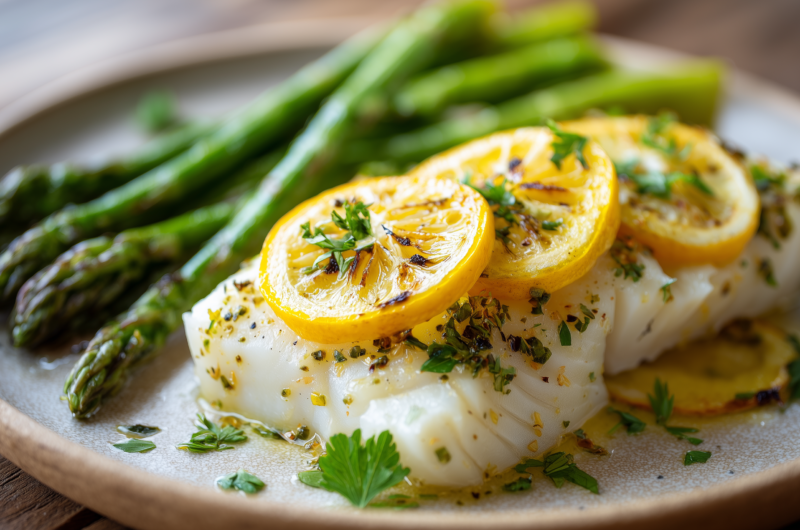
Lemon and Herb Baked Cod with Asparagus
2
servings10
minutes15
minutesIngredients
2 wild-caught cod fillets (or any white fish)
1 bunch of asparagus, woody ends trimmed
1 lemon, thinly sliced
2 tablespoons olive oil
1 teaspoon dried oregano and a pinch of sea salt
Directions
- Preheat your oven to 200°C.
- Place the asparagus and fish fillets on a large baking tray.
- Drizzle everything with olive oil and sprinkle with the herbs and salt.
- Lay the lemon slices over the fish.
- Bake for 15 to 20 minutes until the fish flakes easily and the asparagus is tender.

Quick Turkey and Cashew Stir-Fry
2
servings15
minutes10
minutesIngredients
300g turkey breast cut into cubes
2 cups of mixed stir-fry vegetables (broccoli, peppers, snap peas)
A handful of raw cashews
2 tablespoons soy sauce (or coconut aminos if you are soy intolerant)
1 tablespoon fresh ginger, grated
1 tablespoon coconut oil
Directions
- Heat the coconut oil in a large pan or wok over medium-high heat.
- Add the turkey cut into cubes and cook until browned.
- Add the vegetables and ginger, stirring frequently for about 5 minutes.
- Pour in the soy sauce / coconut aminos and add the cashews.
- Cook for another 2 minutes until the sauce has coated everything and the turkey is cooked through.
- Serve with rice or cauliflower rice (if you are avoiding grains).

Red Lentil and Spinach Dhal
Ingredients
150g red lentils, rinsed well
1 tin of full-fat coconut milk
1 teaspoon turmeric and 1 teaspoon ground ginger
2 large handfuls of fresh spinach
1 small onion, finely diced
Directions
- Sauté the onion in a little oil in a saucepan until soft.
- Add the lentils, turmeric, and ginger, stirring for a minute.
- Pour in the coconut milk and half a tin of water.
- Bring to a gentle simmer and cook for 20 minutes, stirring occasionally, until the lentils are soft and creamy.
- Stir in the spinach at the very end until it wilts.
- Season with a little salt and serve.
Next Steps
Understanding your nutritional needs is a big part of the journey toward feeling your best. If you would like to explore your health more deeply or discuss how we can help you address chronic fatigue or digestive issues, we would love to chat.
Book a conversation with our Treatment Planning Team today to discuss your health journey and how we can support your specific needs.


